ROMANA
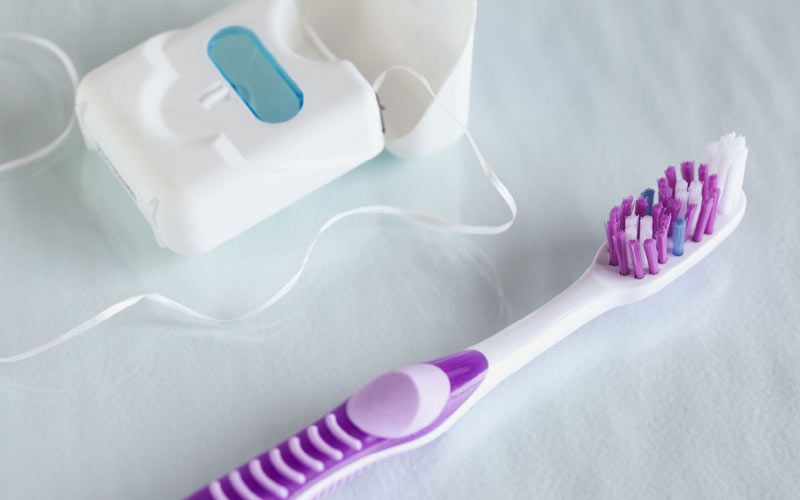
Dental brushing is the most used, and the most commonly known mean of oral hygiene. It is done with a toothbrush - with brushes of different hardness (soft, medium and hard) and with a toothpaste (we recommend a toothpaste containing fluoride). However, in order to correctly clean the oral cavity, brushing should be done following some special techniques to ensure the correct and complete removal of bacteria that can lead to tooth decay.
Horizontal brushing is not effective in interdental spaces and can also harm the soft tissues, causing gingival retraction and cervical abrasion in teeth uncovered with crowns. Circular brushing, although easy to grasp, does not adequately hygienize the faces and does not provide adequate gingival massage. Vertical brushing, most appropriate for oral hygiene, does not adequately hygienic the cervical margins at the jaw-dental junction, nor the deep areas of the teeth surface.
A brushing method can be considered good if it meets the following requirements:
- to hygienize very well all extraalveolar surfaces of natural and artificial teeth
- to not damage the natural dental or soft tissues
- be simple, easy to use and practiced by any person
- be performed systematically on teeth, vestibular, oral and occlusal groups
There is no universally valid brushing method that is appropriate for all patient categories. The choice of one or the other brushing technique and the type of brush depends on a number of individual particularities: age, dento-periodontal condition, presence or absence of obturations and especially prosthetic restorations. The brushing technique involves selecting movements to impart to the active part a sanitizing effect on all dental surfaces.
From the wide variety of existing methods, in practice the most recommended brushing method by the practisioners is the Bass method, considered to be one of the most complete method of ortho-dental hygiene. On a second place is Charters method.